Agile Accommodation Without Planning or Friction
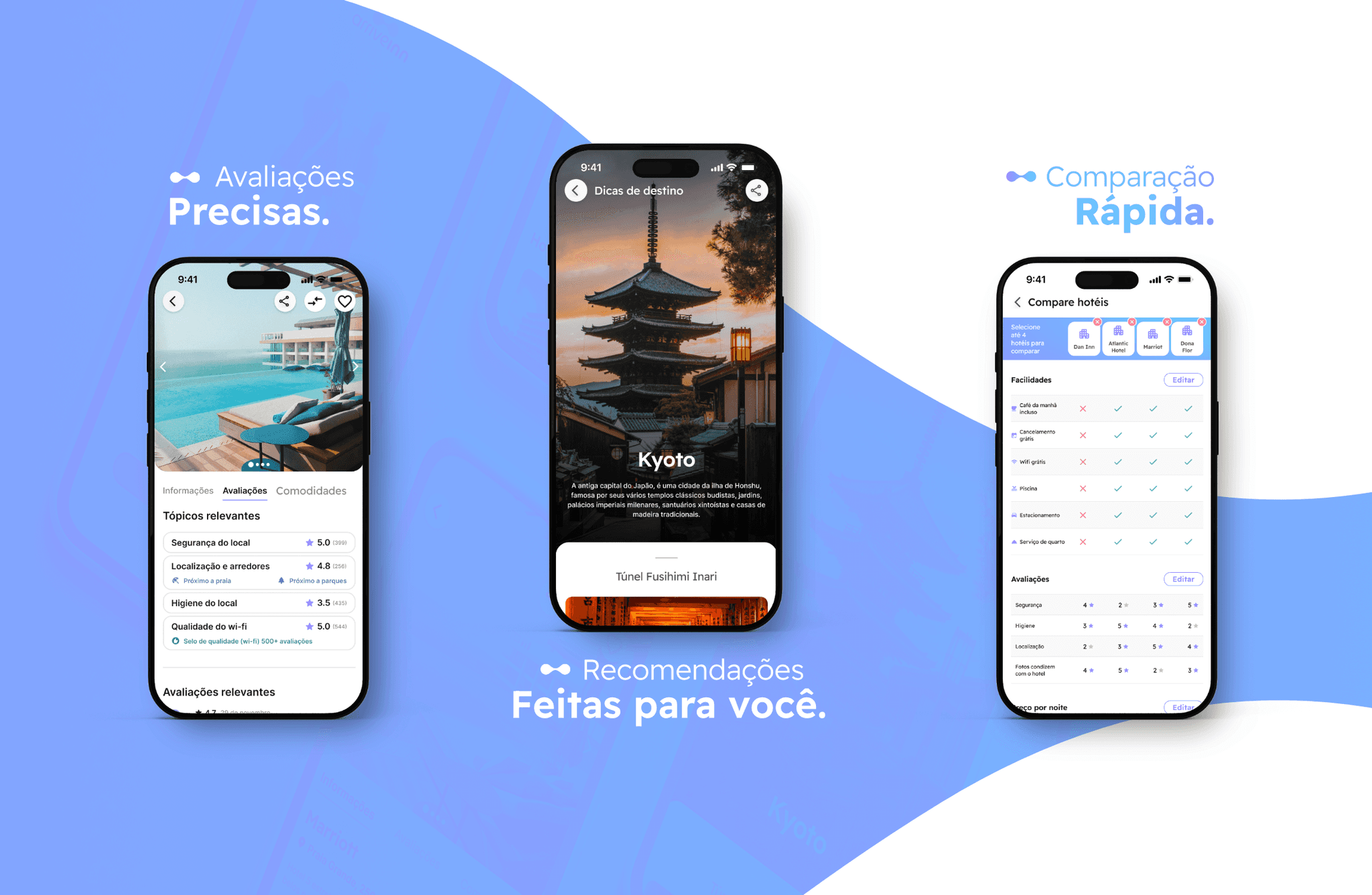
Travel planning:
Avoids problems but causes headaches!
This study began with a common usability issue: the friction involved in planning trips on mobile devices. Recognizing this problem, I assembled a team within a UX community to research and explore potential solutions. We initiated our project by conducting market research and reviewing existing knowledge in the field.
A Priceline study indicates that 22% of travelers find creating a travel itinerary to be one of the most frustrating aspects of trip planning. On average, people spend the equivalent of two full workdays (16 hours) to complete their planning—a figure that increases by an additional 30% among Generation Z and Millennials.
For 2024, Booking.com reported that 52% of travelers desired to book trips where the destination remained a mystery until arrival, and 69% preferred flexible itineraries. Additionally, a Google study revealed that 69% of travelers fear not making the best decisions or finding the best prices when using mobile devices, and only 23% believe they can secure deals as good on mobile as on a computer.
Divide to conquer:
Breaking the Problem into Manageable Steps
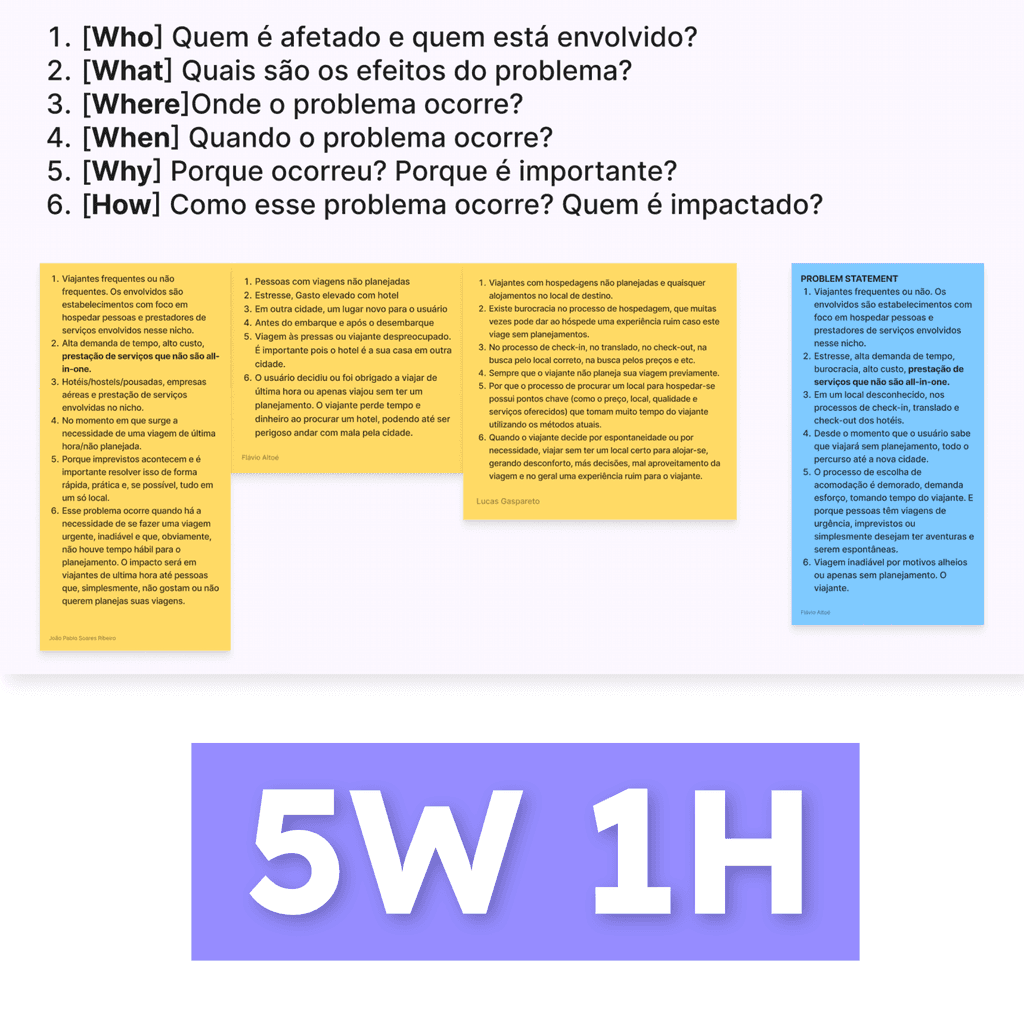
Recognizing the research opportunity, we embarked on the project. To develop a product effectively, we needed a strategic approach—understanding the user from the outset, identifying their problems and how they occur, and comprehending the business model behind our product and proposed solution. We employed Design Thinking, the 5W1H method to define the problem, and the Business Model Canvas to visualize our business and product proposal.
Discovery and Research:
Understanding the Users
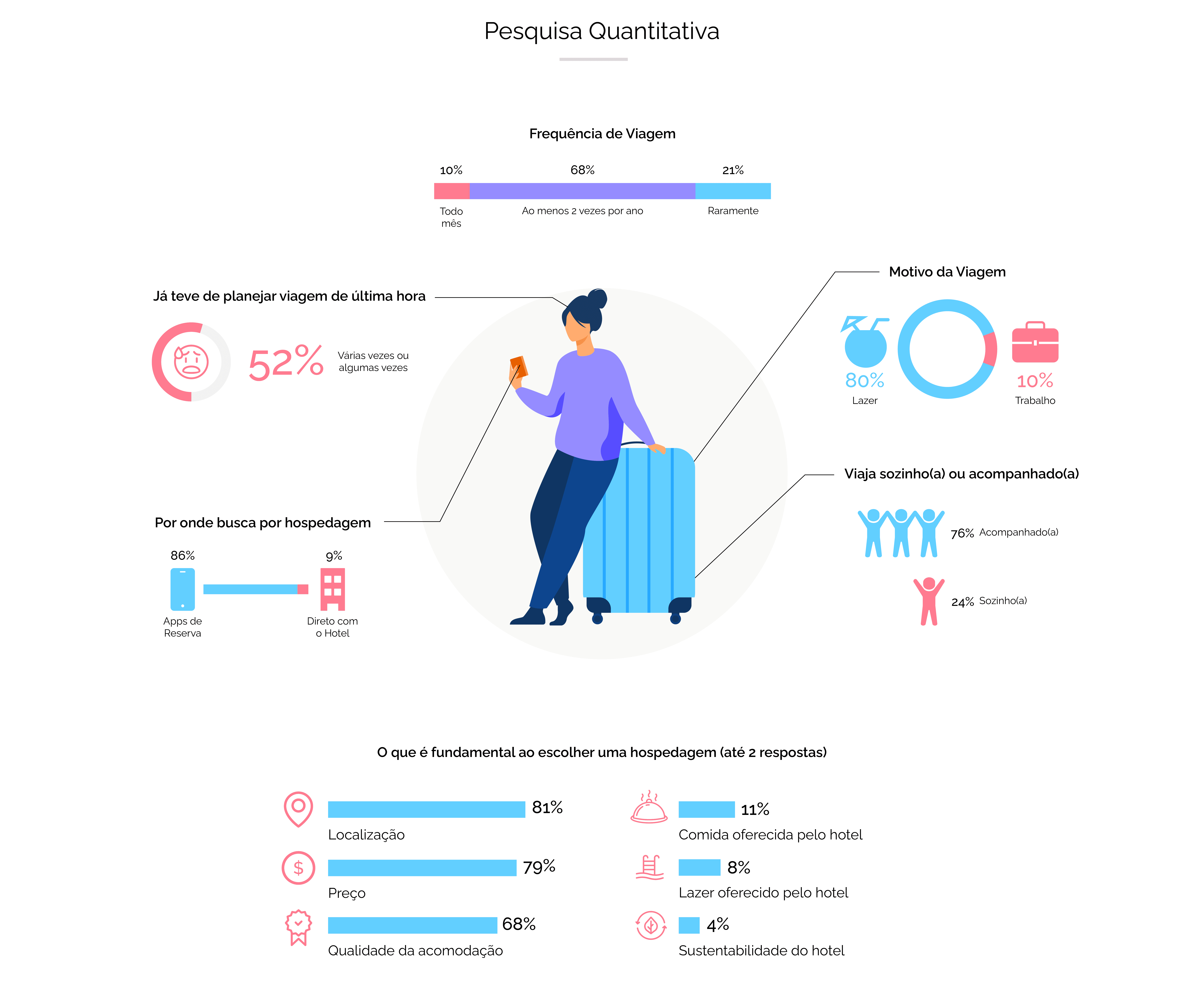
To investigate competitor flows and processes, as well as user preferences, thoughts, perceptions, and essential needs during travel, we conducted various types of research:
Secondary Research
Benchmarking
Surveys and Interviews
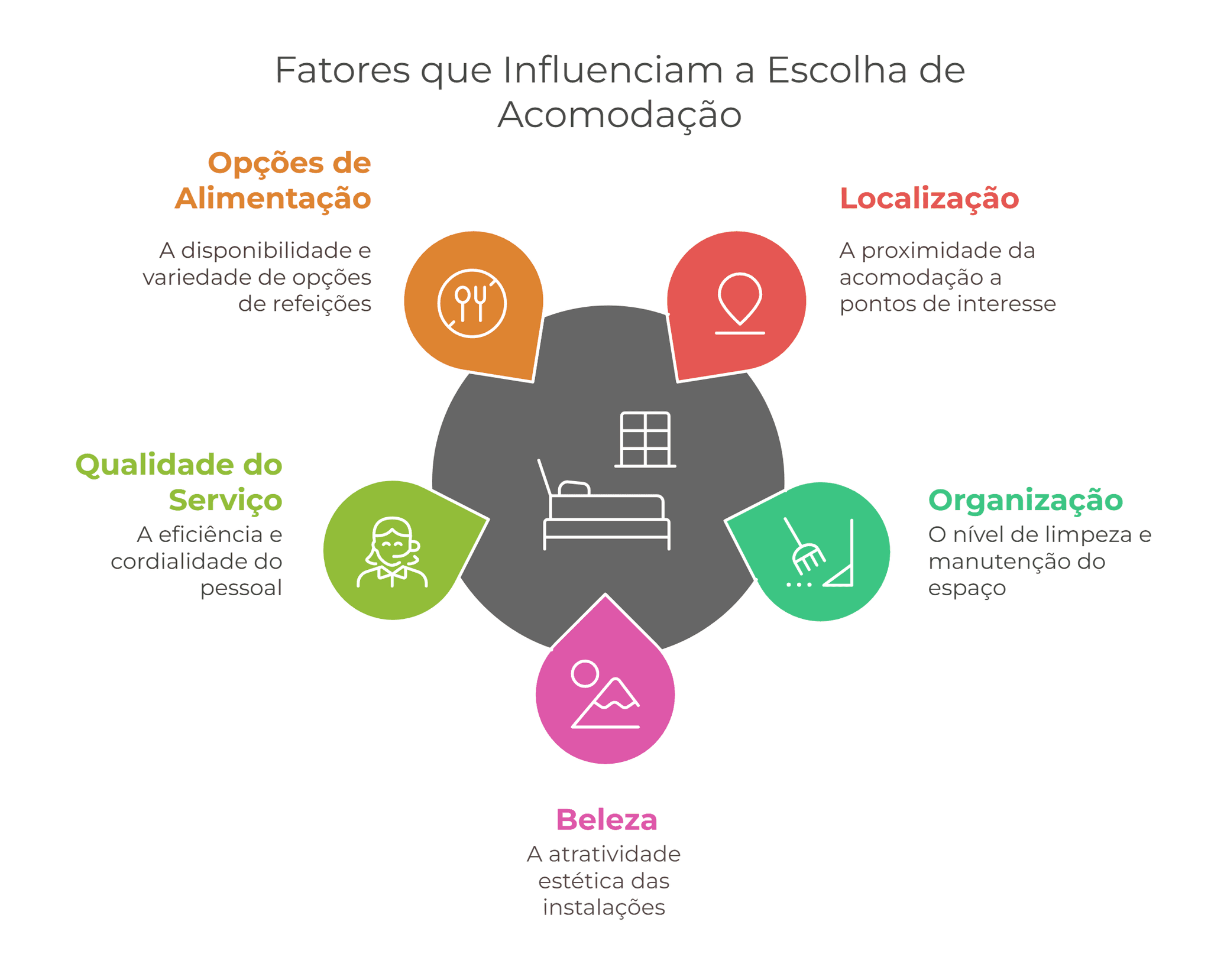
Review some initial results in the section below and the next.
User Focus and Target Audience:
Personas and the User Journey
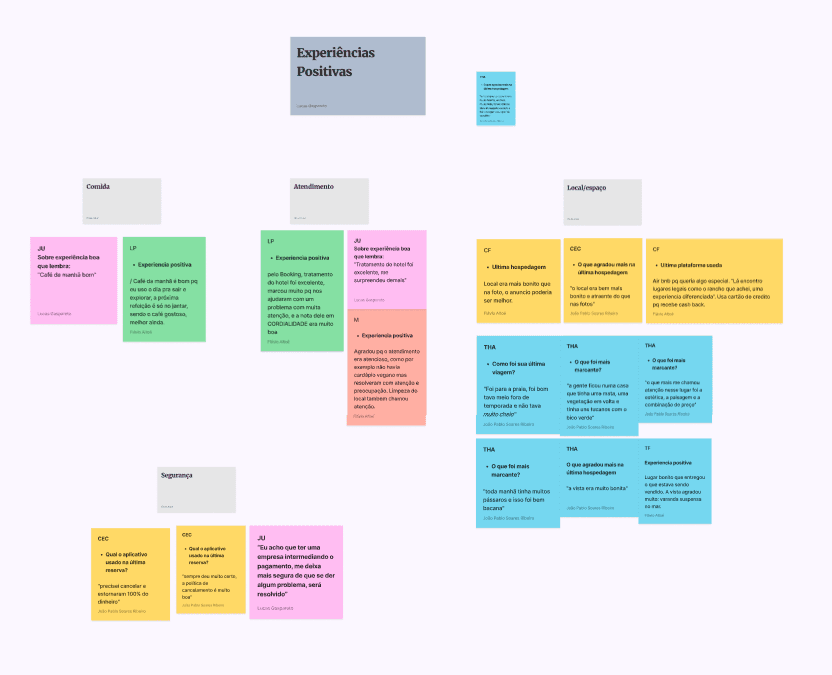
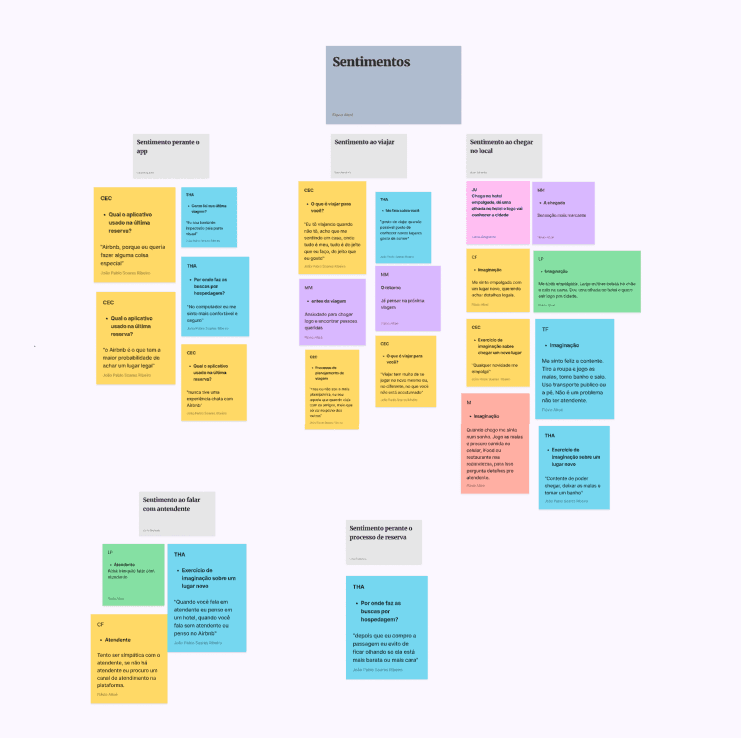
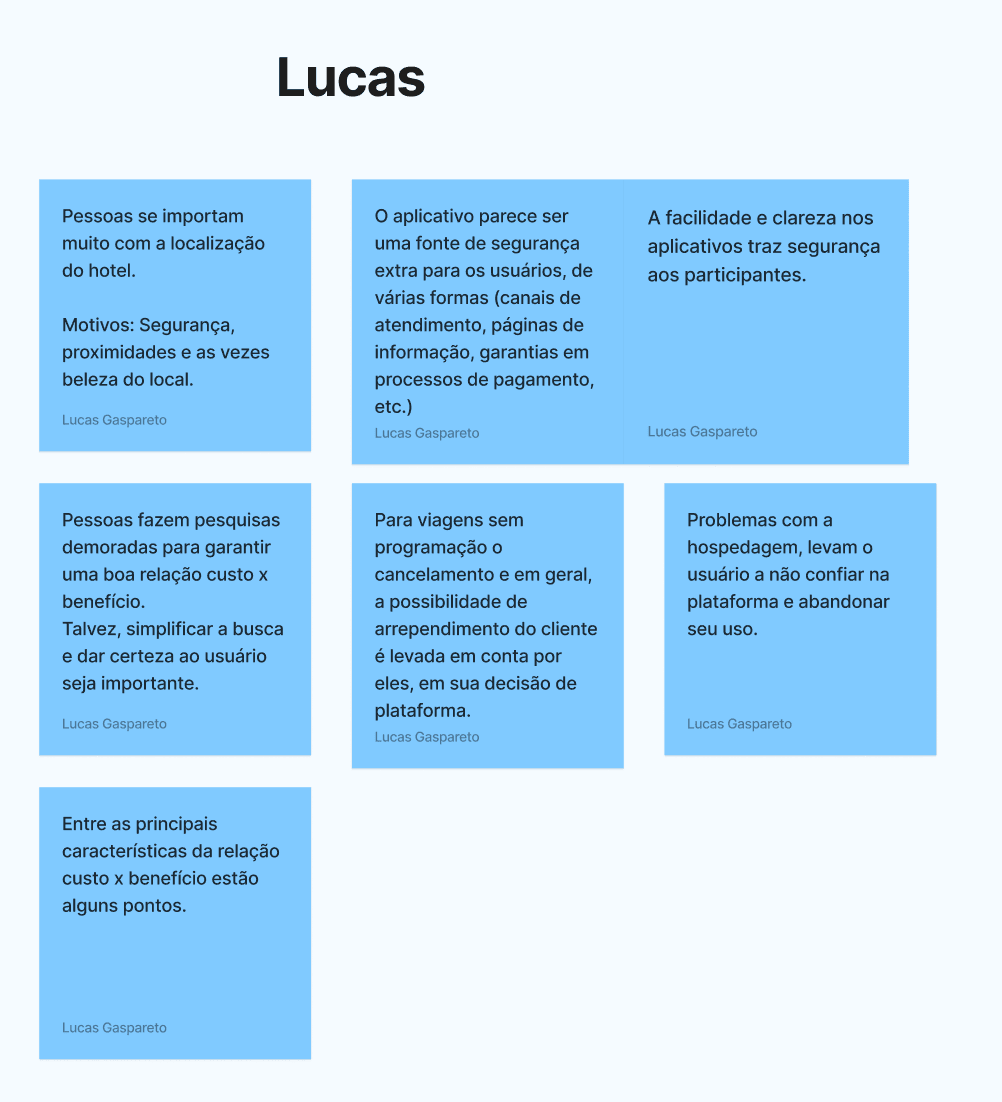
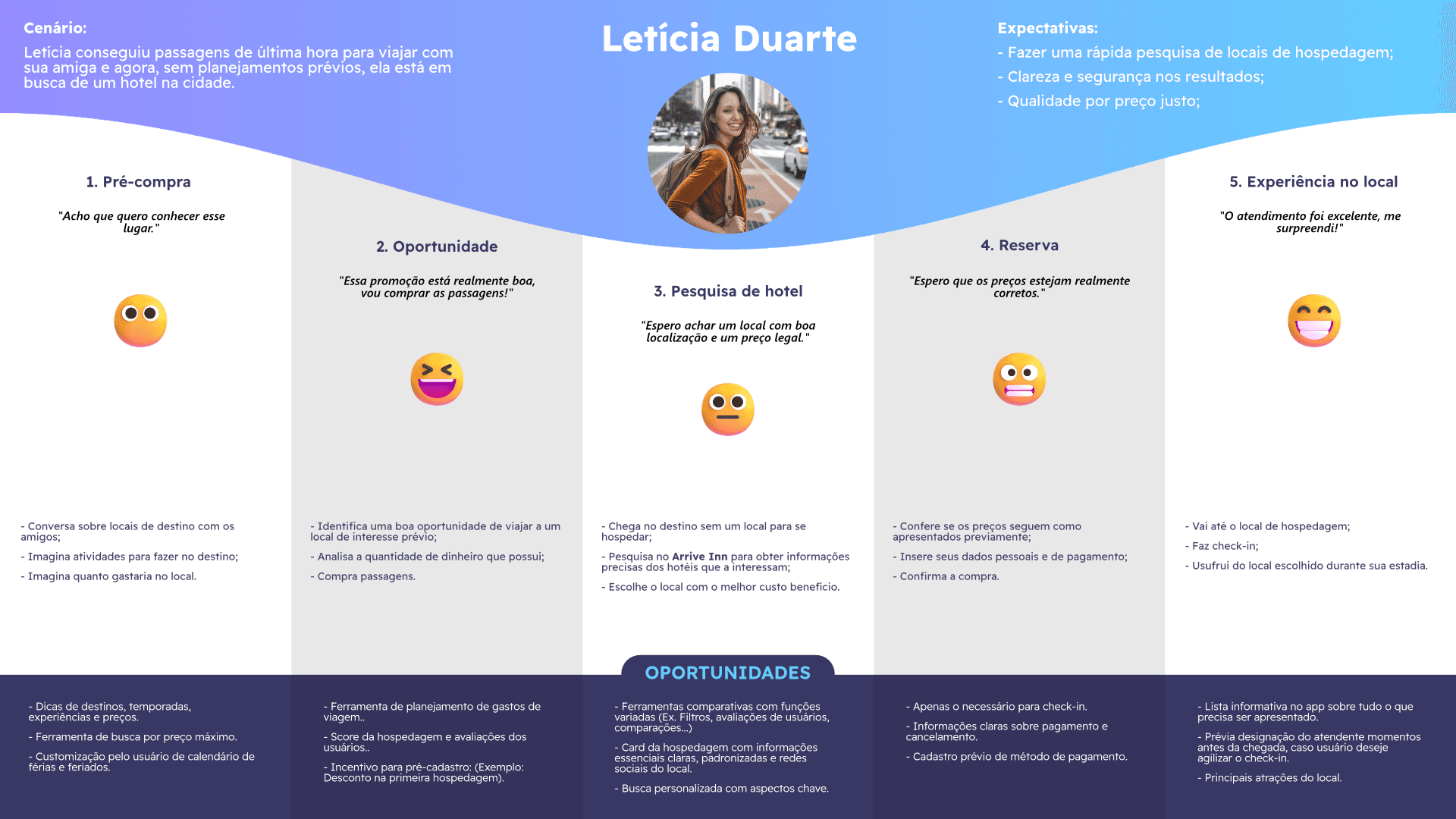
To analyze the collected data, I organized an Affinity Map in FigJam. I created categories to select excerpts from the interviews and arranged them so each participant could contribute to the organization. The analysis led us to understand the target audience as two personas with entirely different journeys:
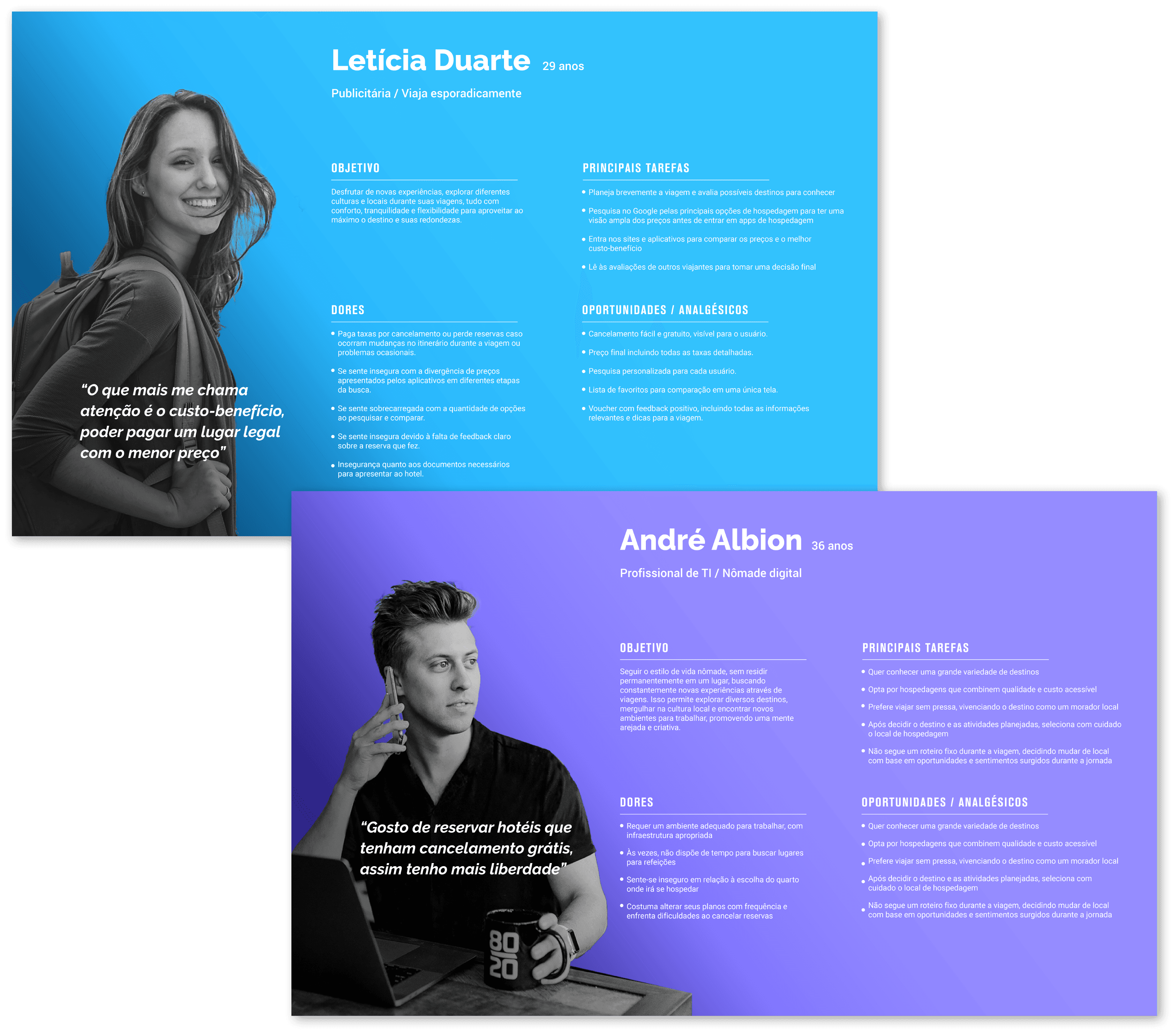
A group seeking to explore new places with friends and family, taking advantage of flight deals or shared vacations;
A group also desiring new experiences but approaching travel as a lifestyle, requiring more structure and flexibility in accommodations to work effectively (Digital Nomad).
We developed the personas: Casual Traveler (Letícia) and Digital Nomad (André). Common names in Brazil, but could be John and Jane Doe ;)
Done mapping:
Prototyping Started
After the first results, we had enough data to start building our prototypes with trust. We created basic, low-fidelity prototypes first, to test main navigation and broader UI aspects first. After the first batch of tests, we analyzed and gathered insights and moved forward to high-fidelity prototypes, to look at in-depth user experience needs with the UI.
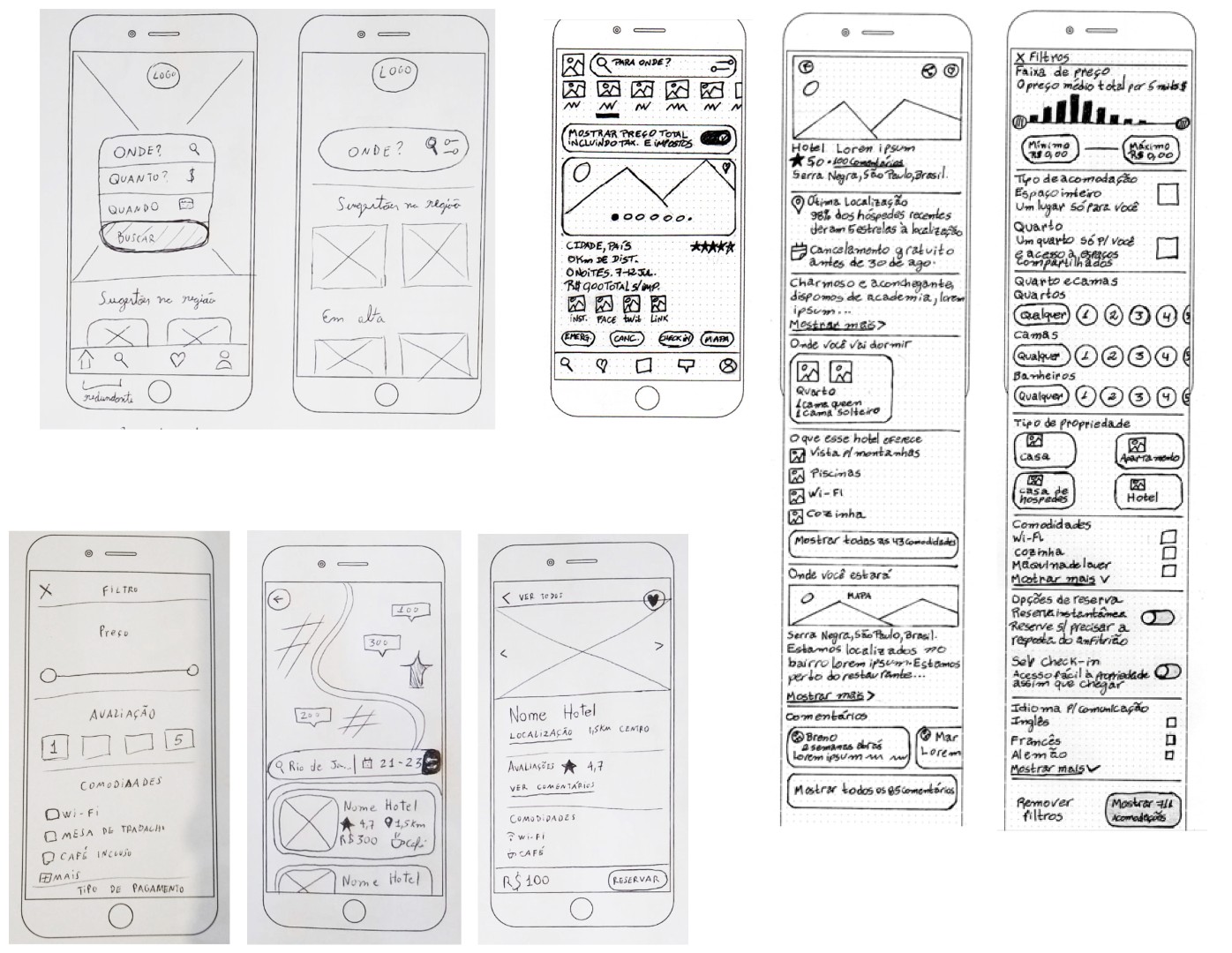
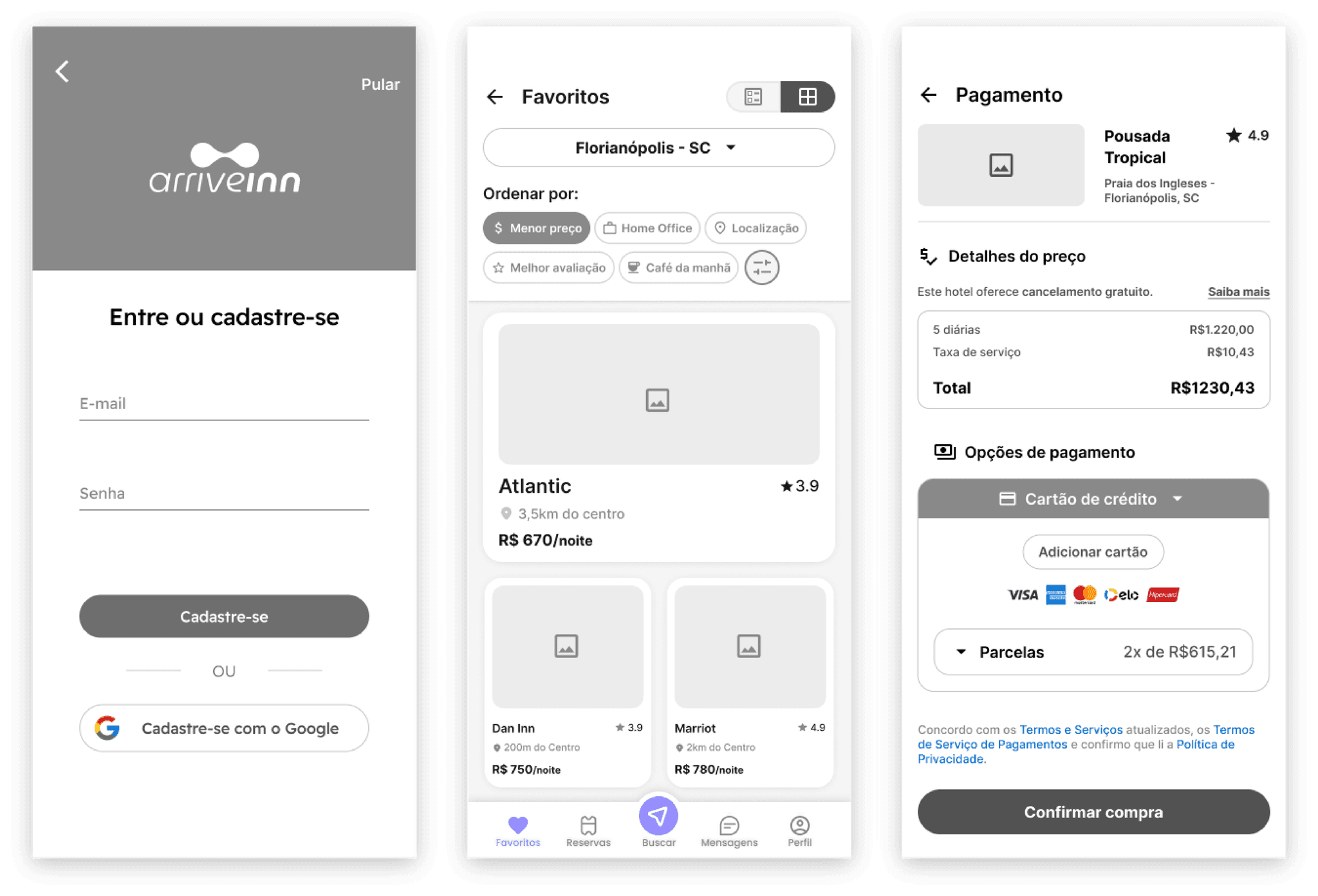
Utilizamos as melhores ideias de cada participante, somados a um benchmarking de competidores como Booking, Airbnb, Trivago, Hoteis.com e etc, para criar nosso protótipo de média fidelidade.
O benchmarking tinha como objetivo analisar quais tipos de funcionalidades estes aplicativos providenciavam e também, um fluxo em comum de reserva em todos os aplicativos para que possamos comparar o tempo médio deste fluxo nestes aplicativos em relação ao nosso aplicativo proposto.
Aplicamos testes remotos, moderados e não moderados, e você pode conferir alguns resultados iniciais abaixo:
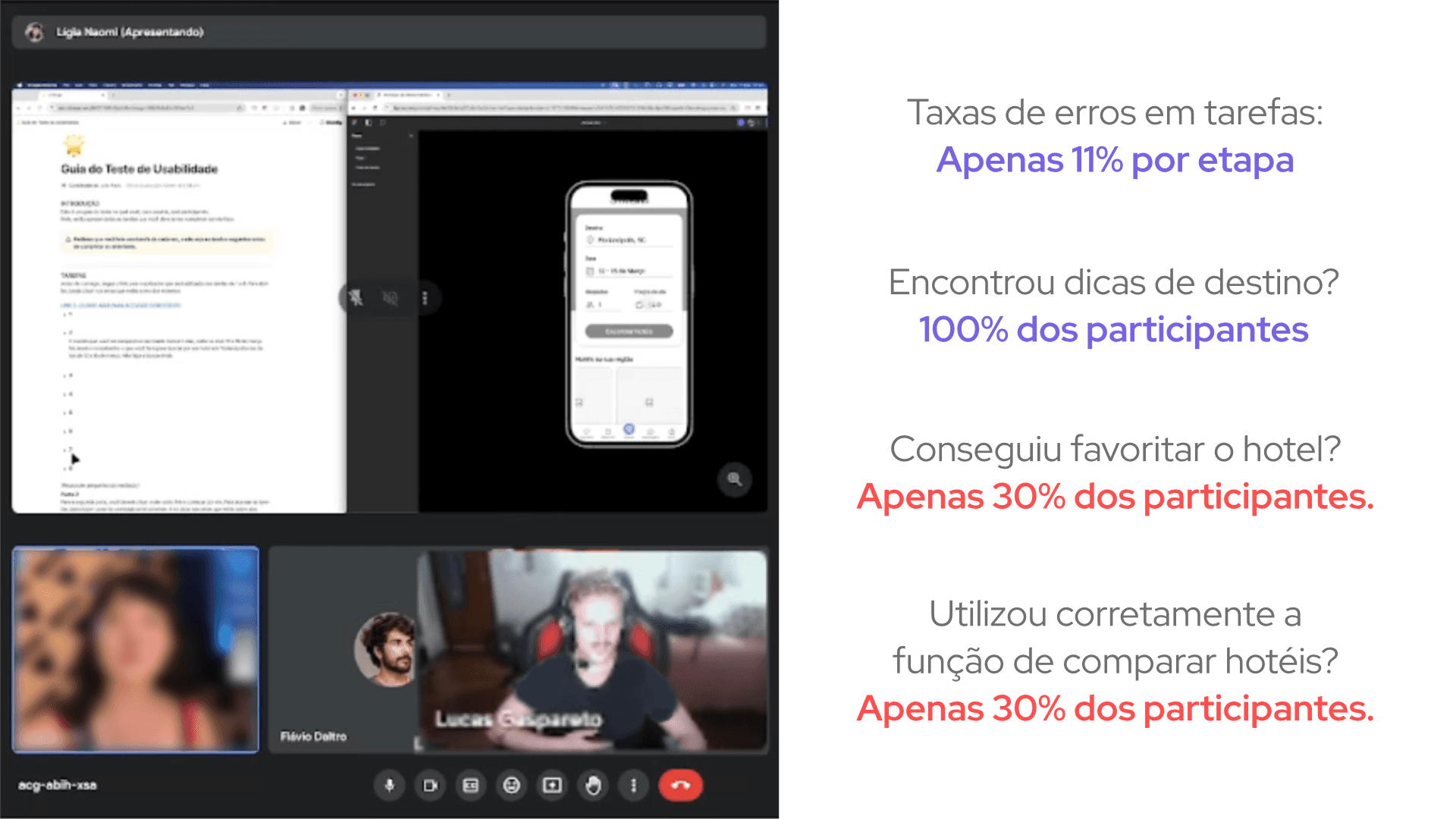
Guiei o time em todos os processos de análise, mapeamento e testagem. Aprosseguimos para a diagramação do nosso protótipo de alta fidelidade de fato.
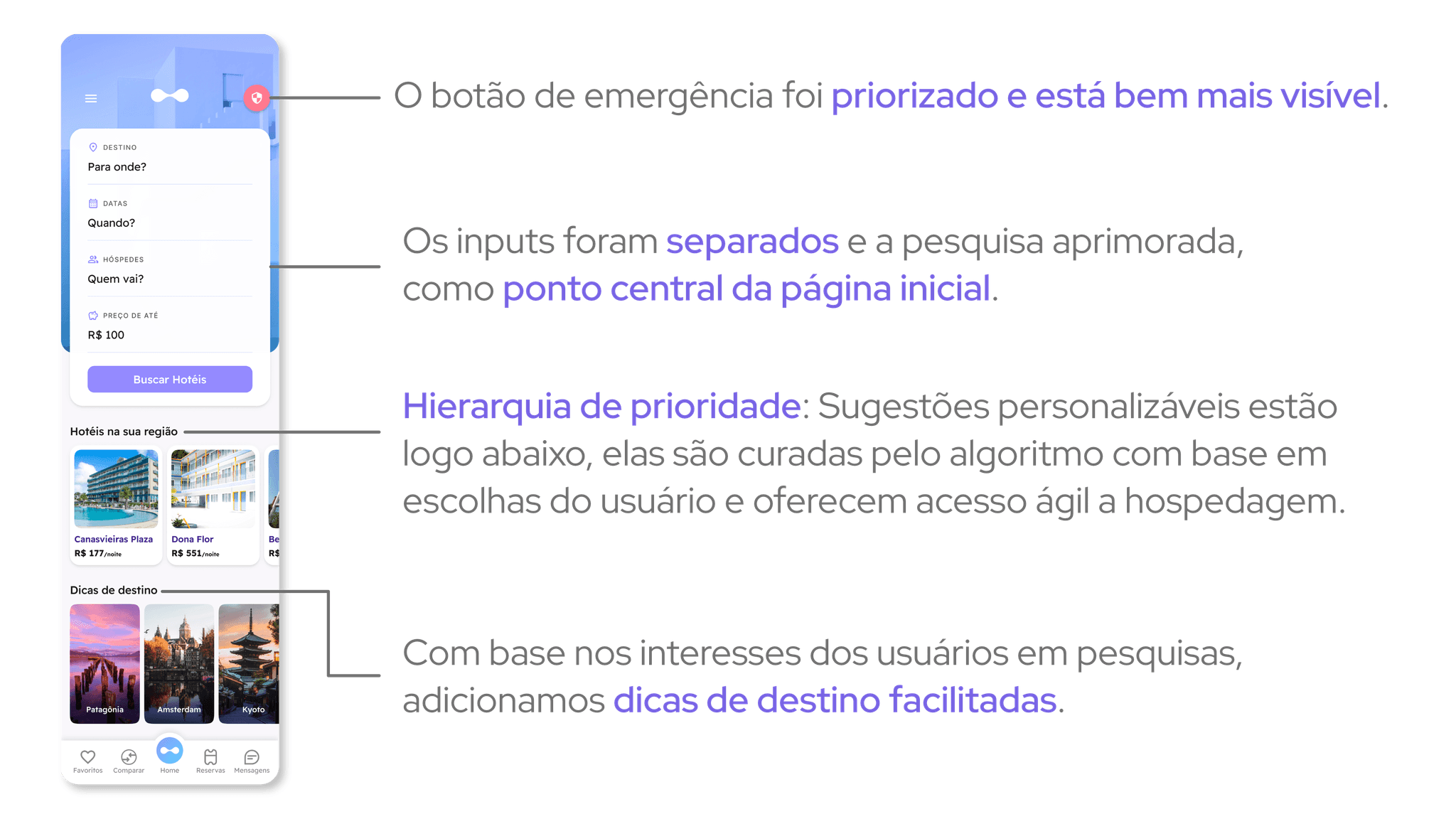
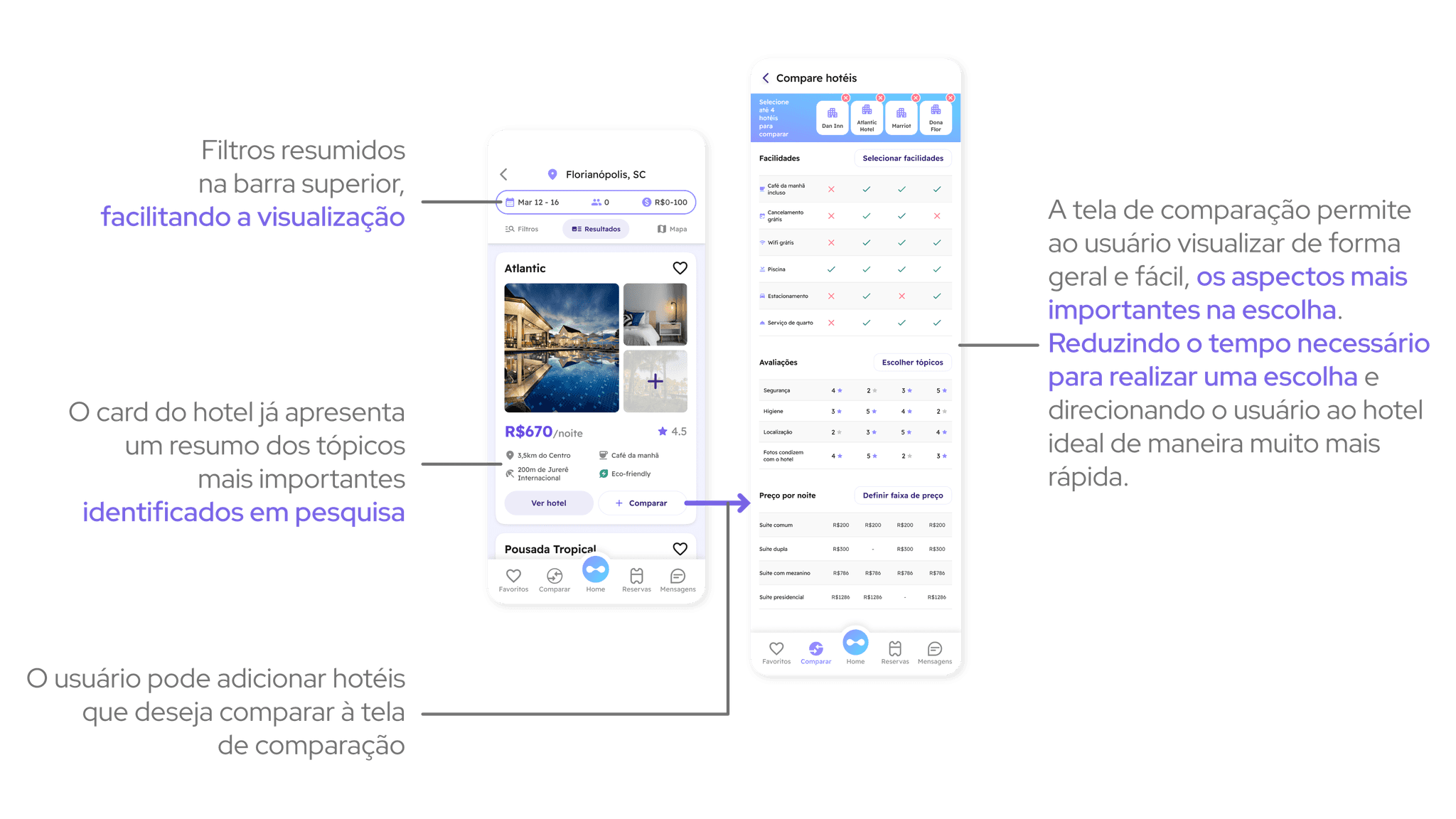
Conclusão:
Primeiros resultados e o que vem a seguir?
Ao relacionarmos as métricas coletadas do Benchmarking com os principais competidores do segmento: Booking e Airbnb. Concluímos em nosso estudo que nosso fluxo de jornada foi até 10x mais rápido e gerou até 3x menos dúvidas e anseios nos usuários.
Confira um protótipo inicial em alta fidelidade do aplicativo clicando aqui.
Separei para o projeto duas previsões do futuro e de quais seriam os nossos próximos passos.
Em pesquisa, ainda possuímos um desafio: Analisar o mercado e o serviço por trás.
Aspectos como:
Tempo de antecedência para reserva em hotéis;
Jornada de personas de funcionários do hotel (recepção, camareiras, etc.)
Outros aspectos vitais do negócio
Este tipo de análise pode ser feita em Service Blueprint, uma ferramenta para visualização heurística do negócio. Porém nosso próximo passo com o Arrive Inn foi levá-lo adiante. O Arrive Inn não é mais apenas um objeto de estudo de caso e se tornou, junto a uma equipe de desenvolvedores, um projeto real, agora com o nome de Destinna, que está em processo de lançamento de um MVP.
Caso deseje consultar o protótipo utilizável do Arrive Inn, entre em contato comigo.
Obrigado por ler até aqui! Caso deseje saber mais sobre o projeto ou me contratar, entre em contato comigo!

© 2025 Lucas Gaspareto.